Tiny DNA Clue Cracks 50-Year-Old Murder
By Taylor Bennett. Mar 1, 2026
Nearly 50 years after 19-year-old Jody Loomis was sexually assaulted and fatally shot while riding her bike in Washington state, DNA evidence helped identify her killer and bring her family long-awaited answers.
According to People, Loomis was attacked in 1972 near Bothell, Washington, after she left home for a bicycle ride. Her body was later found in the woods, launching an investigation that would stretch across generations.
For decades, her family lived with the uncertainty of an unsolved murder.
A Case That Went Cold
At the time of the killing, investigators collected evidence but lacked the technology to identify a suspect.
The case eventually went cold, despite efforts by law enforcement to revisit it over the years. Loomis’s sister, who had lent her the boots she was wearing that day, would later learn that those boots held a crucial clue.
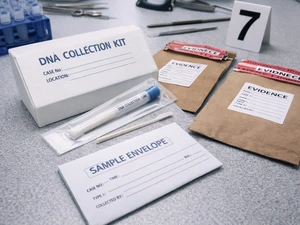
According to People, a tiny trace of DNA preserved on the boots became central to reopening the case decades later.
Breakthrough Through Genetic Genealogy
Advances in forensic science and genetic genealogy allowed investigators to test old evidence in new ways.
Authorities used the DNA sample recovered from the boots to build a genetic profile. That profile ultimately led detectives to a suspect years later, as reported by People and Yahoo News.
The renewed investigation marked a turning point, transforming a long-dormant file into an active prosecution nearly half a century after Loomis’s death.
A Conviction - And a Final Twist
The man identified through DNA evidence was charged in Loomis’s murder.
According to reporting cited by People, the accused died by suicide just hours before a jury returned a guilty verdict. Despite his death, the jury’s decision formally established responsibility in Loomis’s killing.
For Loomis’s sister and surviving family members, the verdict provided a measure of closure after decades of waiting.
A Sister’s Long Search for Justice
Loomis’s sister has spoken about the emotional weight carried over nearly five decades.
The boots she had lent Jody as a teenager became a symbol of both loss and justice - an ordinary item that ultimately helped solve a violent crime. The knowledge that critical evidence had remained intact all those years underscored the persistence of investigators and the power of advancing technology.
Family members described a complicated mix of grief and relief as the case concluded.
Justice Across Generations
The resolution of Jody Loomis’s murder highlights how cold cases can be revived through modern forensic tools.
Genetic genealogy has played a growing role in identifying suspects in long-unsolved crimes, offering new hope to families who once feared answers might never come.
For the Loomis family, the legal outcome cannot restore what was taken in 1972. But after nearly 50 years, the confirmation of who was responsible brought a sense of truth - and a chapter, at last, brought to a close.
References: DNA on Boot Solves 1972 Murder of Jody Loomis | She Was Shot and Left in the Woods in 1972. DNA Solved the Case Decades Later

The Bold Fact team was assisted by generative AI technology in creating this content
Trending