Video Shows Minneapolis ICU Nurse Holding Phone Before Fatal Federal Shooting
By Alex Morgan. Jan 26, 2026

On January 24, 2026, federal Border Patrol agents shot and killed 37-year-old Alex Pretti in Minneapolis, Minnesota, during an immigration enforcement operation that was part of a broader federal crackdown. Pretti, an intensive care unit nurse at the Minneapolis VA Health Care System with no significant criminal history, was among protestors confronting or observing the operation when agents opened fire. Federal officials initially said Pretti approached officers with a handgun and "violently resisted" attempts to disarm him, triggering a self-defense response. However, multiple videos circulated on social media appear to show Pretti holding only his phone in his hand prior to the shooting, with no visible threat in the footage, calling into question the official account of events. The shooting unfolded amid heightened tensions in Minneapolis, where federal immigration enforcement had already led to other uses of force in recent weeks.
Conflicting Narratives and Video Evidence
The Department of Homeland Security (DHS) and Border Patrol maintained that Pretti was armed with a 9 mm semi-automatic handgun and resisted officers, prompting shots in self-defense during the targeted enforcement action. Yet witness and bystander footage verified by major news outlets shows Pretti holding a phone while filming or directing traffic when agents engaged with protestors. Some footage and analysis from multiple angles suggest that agents may have already retrieved a firearm from Pretti's waistband before the fatal shots were fired, deepening questions about whether he posed a threat at the moment of the shooting. Local officials, advocates, and Pretti's family have strongly disputed the federal narrative, arguing that the visual record undermines claims that he was preparing to use a weapon.
Community Response and Protests
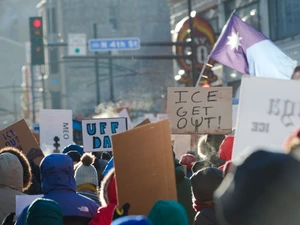
Pretti's death reignited public outrage in Minneapolis and beyond, drawing hundreds of protestors into the streets to oppose federal immigration enforcement tactics and call for accountability. Demonstrators gathered near the shooting site and in downtown areas, confronting federal agents and chanting for justice. Some protests spread beyond Minneapolis to cities across the United States, including San Francisco, New York, and Los Angeles, as part of a broader wave of anti-immigration-enforcement activism sparked by both Pretti's killing and similar incidents earlier in January. Participants demanded transparency, restraint in federal policing, and changes to immigration policy.
Official and Political Reactions
Political leaders in Minnesota and nationally responded with sharply divergent statements. Minnesota Governor Tim Walz publicly urged the Trump administration to withdraw federal agents from the state, condemning the shootings as excessive and counter-productive. Local law enforcement leaders, including the Minneapolis police chief, noted the existence of video evidence that appeared to contradict the federal account and called for full investigation and cooperation. At the same time, federal officials defended their personnel, with Border Patrol leadership characterizing agents as victims of confrontation and emphasizing that officers involved have been placed on administrative duty while investigations proceed. The incident has further strained relations between state and federal authorities over jurisdiction and oversight in immigration enforcement operations.
Legacy and Broader Context of Immigration Enforcement
Pretti's killing occurred amid an intensified federal immigration enforcement operation in Minneapolis that had already drawn criticism for previous shootings and clashes with community members. Just weeks earlier, a different federal agent fatally shot Renee Good, another American citizen, provoking protests and political debate. These back-to-back incidents have amplified concerns about the conduct of federal immigration agents operating in interior cities and the protocols guiding the use of force. Civil rights groups and local leaders have called for independent investigations and reforms, while some federal officials emphasize that agents are carrying out lawful duties under challenging conditions. The ongoing dispute highlights deeper national tensions over immigration policy, law enforcement transparency, and community trust.
References: AP News | KVUE: Minneapolis Mourns ICU Nurse Killed by a Border Patrol Agent as a Warmhearted Neighbor and Caregiver | KSLTV: Minneapolis Mourns ICU Nurse

The Bold Fact team was assisted by generative AI technology in creating this content
Trending