Rare Deep-Sea "Doomsday Fish" Spotted Near Monterey
By Alex Morgan. Feb 19, 2026
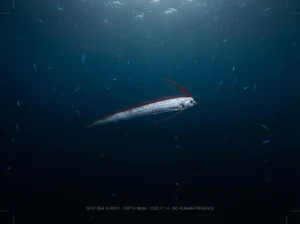
A rare deep-sea fish surfaced in shallow waters off Monterey Bay, California in late December 2025, giving a lucky scuba diver an unusually close encounter with one of the ocean’s most mysterious creatures. The specimen - initially described online as an oarfish, but identified on-site by Monterey Bay Aquarium marine biologist Kevin Lewand as a juvenile king-of-the-salmon (Trachipterus altivelis) - shares the oarfish’s signature ribbon-like body, silver scales, and vivid red crest, and like its better-known cousin, normally inhabits depths thousands of feet below the surface, far from human view.
According to reporting from local affiliates, the sighting drew immediate attention from scientists in the region, who quickly moved to examine and document the specimen. Oarfish strandings are exceptionally uncommon along the California coast, making each event a notable moment for marine biologists.
The appearance also revived a long-standing nickname: the “doomsday fish,” a label rooted more in folklore than in science.
The Legend of the “Doomsday Fish”
Oarfish have long been linked to earthquake myths, particularly in parts of Japan, where historical folklore suggested the fish rise to the surface before seismic events. That association gained renewed attention following the 2011 Tōhoku earthquake and tsunami, when multiple oarfish were reported in Japanese waters in the months leading up to the disaster.
Researchers, however, have consistently emphasized that there is no scientific evidence connecting oarfish sightings to earthquakes. Marine experts have told outlets including BBC and other science publications that while the timing of some strandings may appear coincidental, studies have not demonstrated any predictive relationship between deep-sea fish behavior and tectonic activity.
Here’s why the myth persists - and what science actually says.
They Live in Extreme Depths
Oarfish inhabit the mesopelagic and bathypelagic zones of the ocean, often at depths ranging from about 650 to more than 3,000 feet. At those depths, sunlight barely penetrates, and human access is limited. Because they are rarely observed alive in their natural environment, much of what scientists know about them comes from stranded individuals or occasional deep-sea footage.
Their elusive lifestyle contributes to their mystique. When a species is seldom seen, any appearance can feel extraordinary - and invite speculation.
They Can Grow to Astonishing Lengths
Oarfish are among the longest bony fish in the world, with some reports estimating they can reach lengths of up to 30 feet. Most individuals found are smaller, but even a 10- to 15-foot specimen can appear striking on a beach.
Their elongated, serpentine shape has historically fueled sea serpent legends. The dramatic appearance alone can make a routine biological event seem like something more ominous.
Strandings Are Rare but Not Unheard Of
Marine researchers say oarfish strandings happen occasionally along the Pacific coast, including in California. According to experts cited in regional coverage, these events may be linked to illness, injury, shifts in ocean currents, or changing water conditions.
Scientists caution that deep-sea species are particularly sensitive to environmental changes. A weakened fish may drift upward or be carried by currents closer to shore, eventually washing up on beaches.
No Proven Earthquake Link
Despite popular belief, studies have not established a reliable connection between oarfish appearances and seismic activity. Experts have noted that California, like Japan, experiences frequent minor earthquakes - making it statistically likely that an oarfish sighting and a tremor could occur within the same general timeframe by coincidence.
Seismologists and marine biologists alike maintain that there is currently no accepted mechanism explaining how deep-sea fish would consistently detect and respond to tectonic shifts in a predictive way.
A Rare Research Opportunity
For scientists, however, a stranding is less about myth and more about opportunity. Each specimen provides a rare chance to study anatomy, stomach contents, parasites, and overall health. Because live observations are so limited, physical examinations offer valuable data.
Researchers in California have previously worked with institutions such as the California Academy of Sciences and local marine labs to preserve tissue samples for further study. These analyses can reveal insights into deep-sea ecosystems that remain largely unexplored.
Climate variability and warming oceans have also prompted increased interest in unusual marine events. While no direct link has been established between climate change and oarfish strandings, scientists continue to monitor patterns in marine species distribution.
Separating Folklore From Fact
The sight of a gleaming, ribbon-like fish stretched across the sand is undeniably dramatic. For beach visitors, it can feel like witnessing something ancient and mysterious emerging from the depths.
But marine experts stress that extraordinary appearances do not necessarily signal extraordinary danger. Nature often surprises simply because much of it remains unseen.
In the case of the Monterey Bay oarfish, what stands out most is not an omen - but a reminder of how little of the deep ocean humans routinely observe. When one of its most elusive residents surfaces, it offers a rare moment of connection between the hidden world below and the familiar shoreline above.
References: Rare Deep-Sea Fish Spotted in Monterey Bay by Scuba Diver | Doomsday Fish Prophecies Remain Unproven Despite Popular Legend | Rare Fish Sighting Excites California Scuba Divers

The Bold Fact team was assisted by generative AI technology in creating this content
Trending