Rare Forest Carnivore Photographed in Northern California
By Jordan Reyes. Feb 20, 2026
A rare forest carnivore once believed extinct has been photographed showing signs of recovery in northern California, offering a hopeful update for wildlife conservationists. The coastal marten - also known as the Humboldt marten - was captured on remote trail cameras in old-growth forests near Klamath, according to new research from Oregon State University.
The species was nearly wiped out during the 20th century due to extensive trapping and large-scale logging. Though a small population was rediscovered in 1996, scientists have spent decades trying to determine whether the animal could truly rebound.
The latest findings suggest cautious optimism.
A Careful Search Yields Promising Results
Researchers deployed 135 motion-triggered cameras and 285 hair snares over a three-month period in 2022 to better understand how many martens remain in the region. According to reporting from People and CBS News, the team identified 46 individual coastal martens during the survey.
The animals, roughly the size of a ferret, were observed moving through dense forest undergrowth and climbing among fallen logs. Their chocolate-brown fur and expressive faces have earned them a reputation among researchers as “renowned for their cuteness.”
For scientists who have monitored the species for years, seeing dozens of confirmed individuals in one study area represents meaningful progress.
A Species Once Pushed to the Brink
The coastal marten once ranged broadly along the Pacific Northwest. However, aggressive fur trapping in the early 1900s, combined with habitat destruction from logging, devastated their population.
By the mid-20th century, many believed the animal had disappeared entirely from California. The rediscovery of a small group in 1996 marked a turning point, but numbers remained extremely fragile.
Today, the species is listed as threatened under the federal Endangered Species Act. Researchers estimate only about 500 coastal martens survive across four isolated populations in California and Oregon - roughly 5% of their historic numbers.
What the Martens Need to Survive
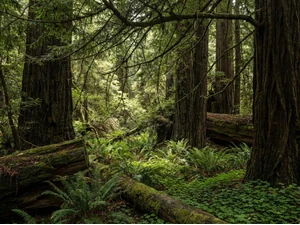
The study also sheds light on the habitat features most important to the species’ recovery. Scientists found martens were most commonly detected in areas with heavy canopy cover, wide mature trees, and abundant hollow logs.
These old-growth forest characteristics provide shelter from predators and harsh weather, along with protection for raising young. Dense vegetation also supports the small mammals and birds that martens rely on for food.
Understanding these preferences allows conservation planners to focus on preserving and restoring specific forest conditions rather than taking a broader, less targeted approach.
Why Trail Cameras Matter
Because coastal martens are elusive and primarily active at night, traditional wildlife surveys can miss them. Remote cameras and hair snares allow researchers to gather noninvasive data over extended periods.
Each photograph provides confirmation not only that the animal is present, but that it is moving, feeding, and surviving in its habitat. Hair samples can also help researchers analyze genetic diversity - a key factor in long-term species resilience.
The technology has transformed wildlife monitoring, especially for animals that avoid human contact.
A Measured but Meaningful Step Forward
Scientists caution that the species remains vulnerable. Isolated populations can face risks from wildfires, disease, and continued habitat fragmentation.
Still, the identification of 46 individual martens in one focused survey area offers something conservation work does not always provide: clear, documented evidence of persistence. Using statistical modeling, researchers estimated a total of approximately 111 coastal martens living within the 150-square-mile study area - a figure that, while still fragile, suggests the local population is larger than direct camera counts alone would indicate, according to Oregon State University.
For a species once written off as lost, each trail camera image represents more than a data point. It signals that careful management, legal protections, and sustained research can make a difference.
In the quiet understory of northern California’s forests, a small, agile carnivore continues to move through hollow logs and dense branches - living proof that even species pushed to the edge can find a way back.
References: Rare Animal Once Thought Extinct Appears on Remote Trail Cameras | Coastal Marten, Nearly Extinct, Spotted on Trail Cameras

The Bold Fact team was assisted by generative AI technology in creating this content
Trending