Scientists Discover T. Rex-Sized Dinosaur in Sahara
By Alex Morgan. Feb 20, 2026
Paleontologists have uncovered fossils of a previously unknown dinosaur species deep in the Sahara Desert of Niger, marking the first new Spinosaurus species described in more than a century. The newly identified predator, named Spinosaurus mirabilis, lived approximately 95 million years ago and stretched about 40 feet long - roughly the size of a Tyrannosaurus rex.
According to reporting from ABC News and Reuters, the discovery was led by University of Chicago paleontologist Paul Sereno during a multi-year expedition into one of the most remote regions on Earth. Researchers say the fossils reveal a massive carnivore with distinctive features not seen in previously identified Spinosaurus specimens.
The name mirabilis translates to “astonishing,” a nod to both the dinosaur’s unusual anatomy and the scale of the discovery.
What Makes This Spinosaurus Different
Spinosaurus species are already known for their crocodile-like snouts and sail-like back structures, but this newly described species appears to have carried a dramatic scimitar-shaped crest on its head. Scientists say the crest was likely covered in keratin - the same material found in human fingernails - giving it a striking visual appearance in life.
The fossil evidence also shows tightly interlocking conical teeth, ideal for gripping slippery prey. Researchers believe Spinosaurus mirabilis specialized in catching large fish, reinforcing the growing consensus that many spinosaurids were semi-aquatic hunters.
Sereno described the dinosaur as a “hell heron,” emphasizing its likely behavior of wading into rivers to pursue prey rather than chasing animals on land like T. rex.
A Rare Spinosaurus Breakthrough
Spinosaurus fossils have long posed challenges for scientists. The original Spinosaurus aegyptiacus was described in 1915, but many early specimens were destroyed during World War II, leaving gaps in the fossil record.
Because of that loss, new material from the Sahara carries unusual scientific weight. Researchers say the newly recovered bones - including portions of the skull and the distinctive crest - provided enough anatomical detail to confirm it represents a separate species.
The find helps clarify evolutionary relationships within the spinosaur family and offers new clues about how these predators adapted to aquatic environments. For Sereno, the crest and skull anatomy were decisive. “This is the coup de grâce for the aquatic hypothesis,” he told Reuters - meaning the new specimen provides the strongest physical confirmation yet that spinosaurids were active water hunters rather than occasional waders.
Discovered in One of the Harshest Landscapes on Earth
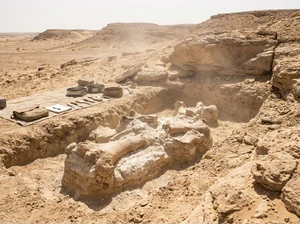
The expedition itself was no small undertaking. According to Reuters, the research team spent years conducting fieldwork in the Sahara, navigating nearly three days of off-road travel from Agadez - one of Niger’s most remote cities - just to reach the dig site. The journey required armed security escorts and extensive logistical coordination with local authorities. Sereno’s team conducted major field seasons in 2019 and 2022, working through extreme heat and limited infrastructure to extract and transport fossils safely, according to CBS News.
The region’s remoteness required extensive planning, and researchers worked with local authorities and support teams to safely excavate and transport fossils. In total, the expedition recovered an estimated 55 tons of specimens, including dinosaur bones and other prehistoric material.
Such large-scale fossil recovery operations are rare, particularly in regions with limited infrastructure. The discovery highlights both the scientific promise and the physical difficulty of paleontological work in North Africa.
Why Size and Shape Matter
At roughly seven tons, Spinosaurus mirabilis ranked among the largest known predatory dinosaurs. Its elongated skull, strong forelimbs, and aquatic adaptations suggest it occupied a distinct ecological niche compared to more familiar land-based carnivores.
Scientists believe spinosaurids may have filled a role similar to modern crocodilians or large wading birds, combining shoreline hunting with powerful swimming ability. The newly identified crest could have played a role in display behavior, species recognition, or sexual selection, though researchers caution that its exact purpose remains under study.
Each new anatomical detail helps scientists reconstruct not just how the animal looked, but how it lived.
A Window Into a Lost World
The Sahara Desert today is one of the driest places on Earth, but 95 million years ago it was a vastly different environment. During the mid-Cretaceous period, the region featured river systems, lush vegetation, and diverse wildlife.
Fossils from the site include remains of ancient fish, crocodile-like reptiles, and other dinosaurs, painting a picture of a thriving prehistoric ecosystem. Discoveries like Spinosaurus mirabilis help fill in the broader story of how life adapted to changing climates and shifting continents.
For paleontologists, each expedition offers the possibility of reshaping long-held assumptions. For the public, the discovery provides something equally compelling: a glimpse of a towering predator that once roamed a landscape now defined by endless sand.
More than a century after the first Spinosaurus was described, this Sahara find underscores how much remains buried beneath the surface - waiting for the next astonishing reveal.
References: Scientists Discover New Dinosaur Species Deep in the Sahara Desert | Fossils of New Species of Huge Dinosaur Spinosaurus Unearthed in Niger

The Bold Fact team was assisted by generative AI technology in creating this content
Trending