Trump Declines to Apologize After Deleting Racist Video
By Alex Morgan. Feb 20, 2026
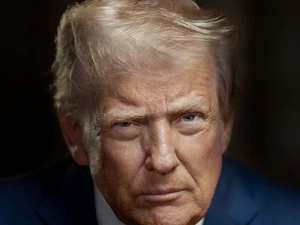
Official Presidential Portrait of President Donald J. Trump, 2025. The White House. Public domain
President Donald Trump is refusing to apologize after posting - and later deleting - a racist video that depicted former President Barack Obama and former first lady Michelle Obama as apes, insisting he “didn’t make a mistake” and blaming a staffer for failing to catch the offensive imagery.
The video was shared on Trump’s Truth Social account late Thursday night and remained online for nearly 12 hours before it was removed. According to CNN and NPR, the final frames of the clip showed the Obamas portrayed as apes in a jungle scene, a long-standing racist trope that civil rights groups have condemned for decades.
When reporters pressed Trump about the post while aboard Air Force One, he said he had only watched the beginning of the video - which included debunked claims about voting fraud - before passing it along to a staff member to upload. He said he did not see the racist imagery at the end.
The President’s Explanation
Trump condemned the racist portion of the video when asked directly but stopped short of apologizing. “No, I didn’t make a mistake,” he told reporters, according to CNN. He maintained that the offensive imagery was not something he personally reviewed before the post went live.
A White House spokesperson initially dismissed criticism as “fake outrage,” before the post was removed. The spokesperson later said a staffer had made the error in sharing the full clip.
The episode quickly became less about the mechanics of social media review and more about presidential accountability. For critics, the explanation raised questions about internal controls and the standards applied to content shared by the nation’s highest office.
A Rare Bipartisan Rebuke
The backlash was swift - and unusually bipartisan.
Sen. Tim Scott, a Republican from South Carolina and one of Trump’s closest allies in Congress, said he was “hoping it was fake” but called it “the most racist thing I’ve seen out of this White House,” adding that “the President should take it down,” according to reporting from NPR. His condemnation stood out not only for its bluntness but for its source.
Other Republican lawmakers publicly urged the president to delete the post and apologize. Reps. Mike Lawler of New York and Nick LaLota also of New York both called for the content to be taken down, signaling discomfort within the party’s ranks.
On the Democratic side, House Minority Leader Hakeem Jeffries responded with a profanity-laced condemnation on Instagram, underscoring how quickly the controversy spread beyond Washington into the broader social media ecosystem.
A Cultural Flashpoint
Racist depictions comparing Black individuals to apes have a long and painful history in American culture, used historically to dehumanize and justify discrimination. Civil rights advocates have repeatedly warned that such imagery carries symbolic weight far beyond a single meme or post.
That context is part of why the episode escalated so quickly. This was not an obscure online figure amplifying offensive material; it was a sitting president sharing it from his official platform.
For supporters, Trump’s explanation that he did not view the full clip before it was posted may suffice. For critics, the refusal to apologize - even while condemning the imagery itself - reinforced what they see as a pattern of boundary-pushing rhetoric and defiance in the face of controversy.
The Stakes Beyond One Post
The incident arrives in an already polarized political climate, where social media remains a central battleground for influence and messaging. Presidential posts are not casual expressions; they are archived, dissected, and amplified in real time.
That the video remained online for nearly half a day before being removed has become part of the story. It was long enough to circulate widely, drawing attention from lawmakers, journalists, and advocacy groups before the White House intervened.
In declining to apologize, Trump signaled that he views the episode less as a personal misstep and more as a staff-level failure. But for many Americans, the controversy is not about who clicked “post.” It is about what standards apply when the person at the center of the spectacle is the president of the United States.
In 2026, when every digital gesture can ripple outward in seconds, the line between a fleeting post and a defining moment is thinner than ever.
References: Trump Shares Racist Video Depicting Obamas as Apes | Trump Posts Racist Meme of the Obamas, Then Deletes It

The Bold Fact team was assisted by generative AI technology in creating this content
Trending